Oct 18, 2026Applications & Industries
Quick Release Pins for Agricultural Machinery: How Do You Handle Dust, Vibration, and Weather?
How to select agricultural quick release pins for dust, vibration and wet weather. Compare materials, fit, load ratings and quality checks.
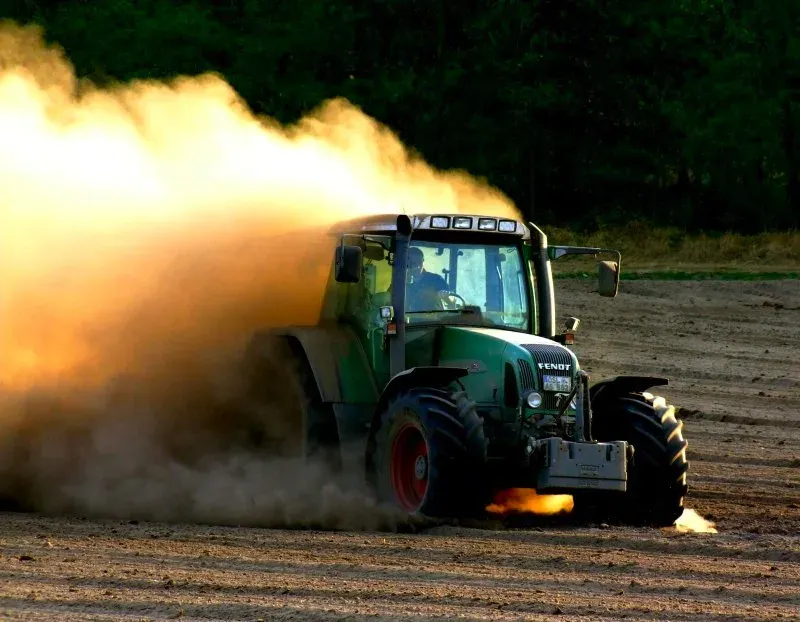
Farm equipment does not get the luxury of a clean workshop. Dust enters moving parts, vibration stresses connections, and rain leaves metal exposed to corrosion. The wrong quick release pin can interrupt a critical working day. I recommend choosing pins around real operating conditions, not catalog photographs or optimistic product descriptions.
To choose quick release pins for agricultural machinery, I examine the application, load direction, locking mechanism, diameter, grip length, material, and exposure to dust, vibration, and moisture. I also check whether the connection needs an equipment-approved hitch pin rather than a general-purpose quick release pin. A stainless steel body or a thicker shaft does not automatically make a product safe. Ask your supplier for drawings, applicable load data, representative samples, and an inspection plan before approving a bulk order.
I'm Jason, CEO of SKN Fastener, a China-based B2B industrial fastener company established in 2010. Here is how I would assess these details before sourcing pins for agricultural equipment.
Where Are Quick Release Pins Used on Agricultural Equipment?
Agricultural equipment often needs removable connections for adjustment, access, or maintenance. Pins may be used on equipment guards, locating fixtures, adjustable brackets, and selected implement mechanisms. The role of the connection matters much more than the product name.
Application | What the buyer should verify |
|---|---|
Removable service panel | Retention and convenient operation |
Adjustable seeder bracket | Dimensional fit and resistance to vibration |
Harvester maintenance fixture | Repeated engagement and wear |
Sprayer adjustment point | Chemical exposure and corrosion |
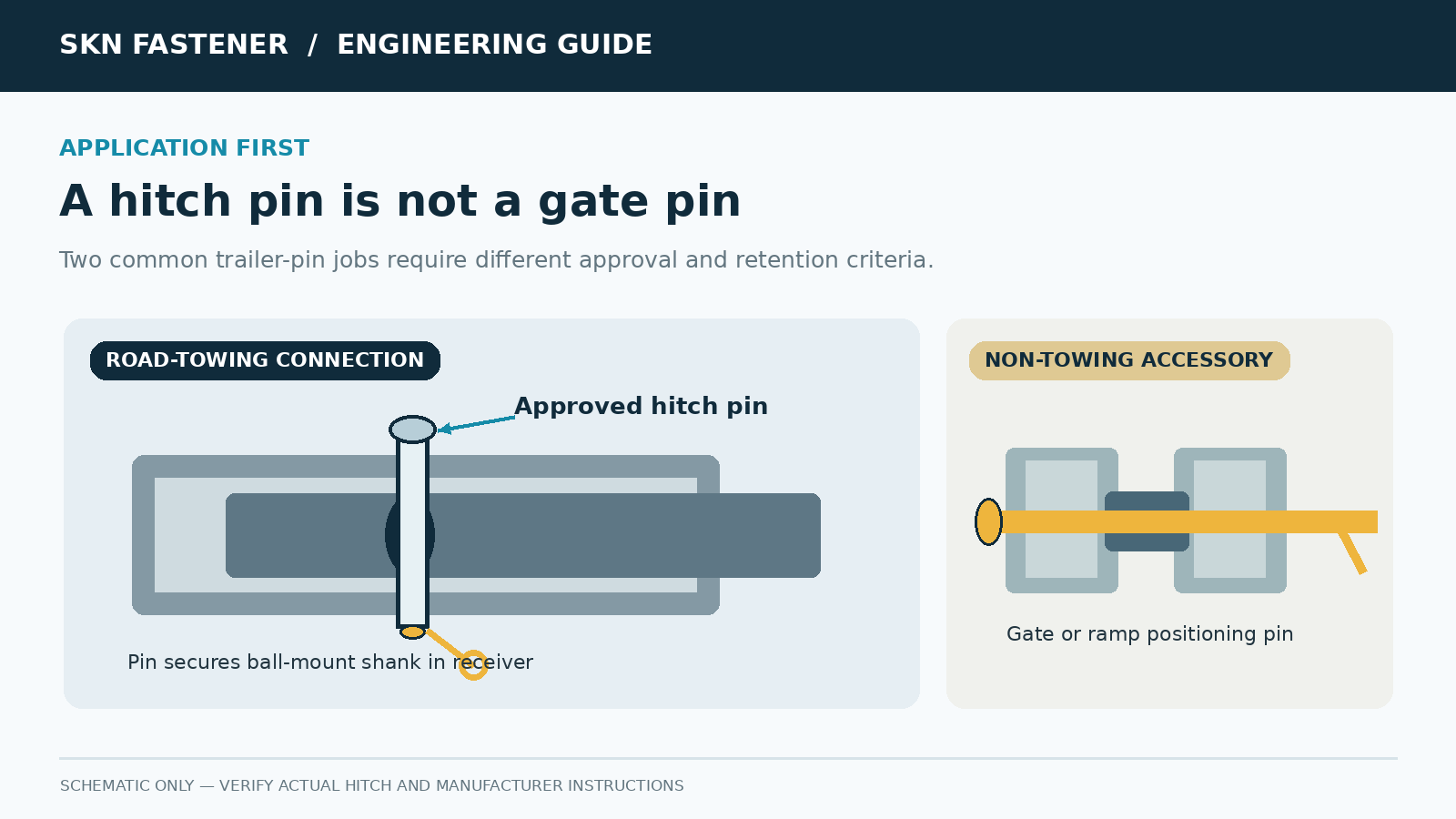
Tractor or implement hitch | Equipment-approved geometry and load capacity |
I always separate positioning and access applications from connections that transmit towing or structural loads. A push-button ball lock pin is not automatically a substitute for a specified tractor hitch pin. Follow the equipment manufacturer's approved design and any relevant tractor-implement connection requirements.
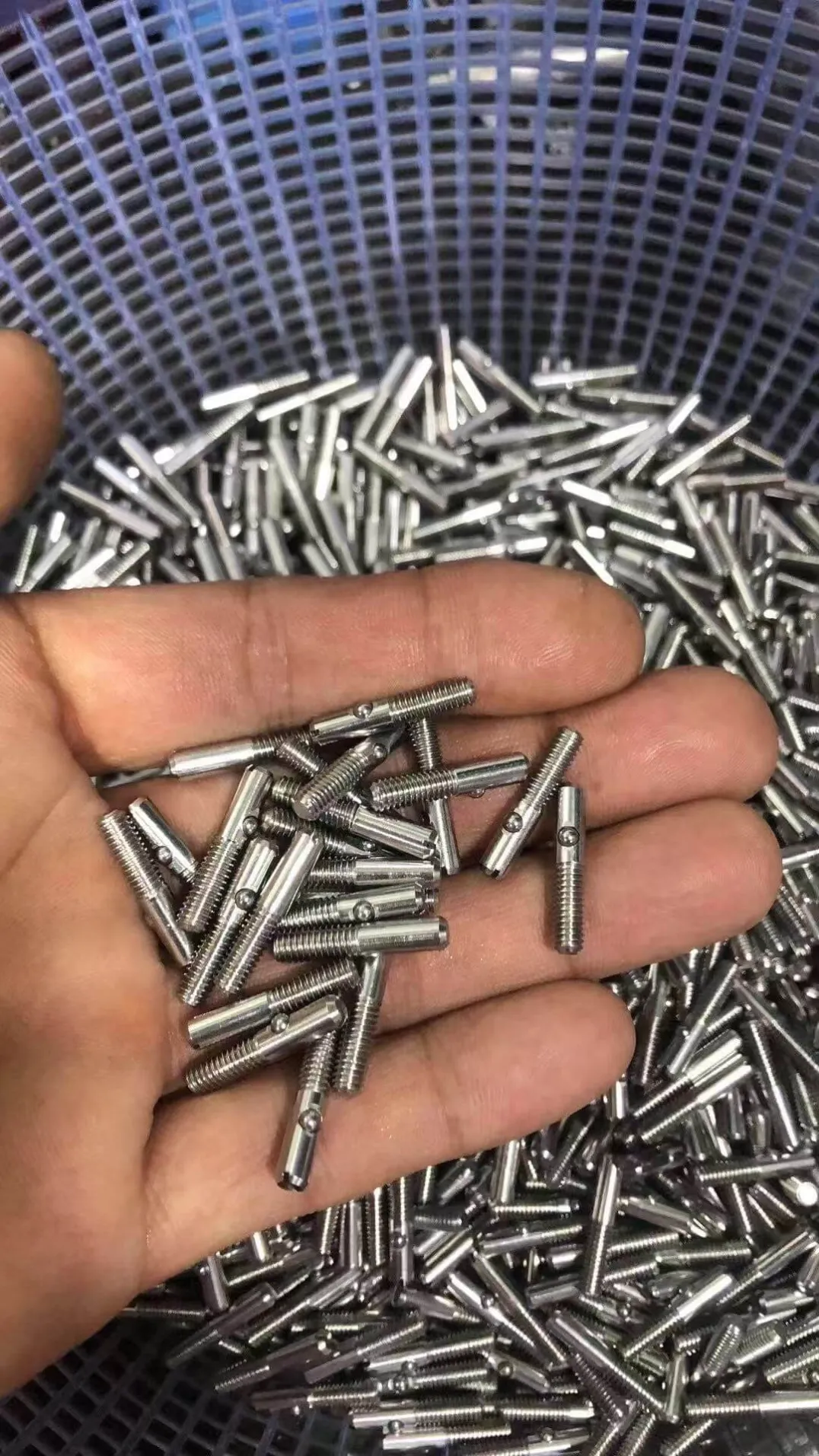
Buyers comparing pin types can review the SKN quick release pin range and request a drawing for the specific assembly.
Which Pin Design Should You Choose?
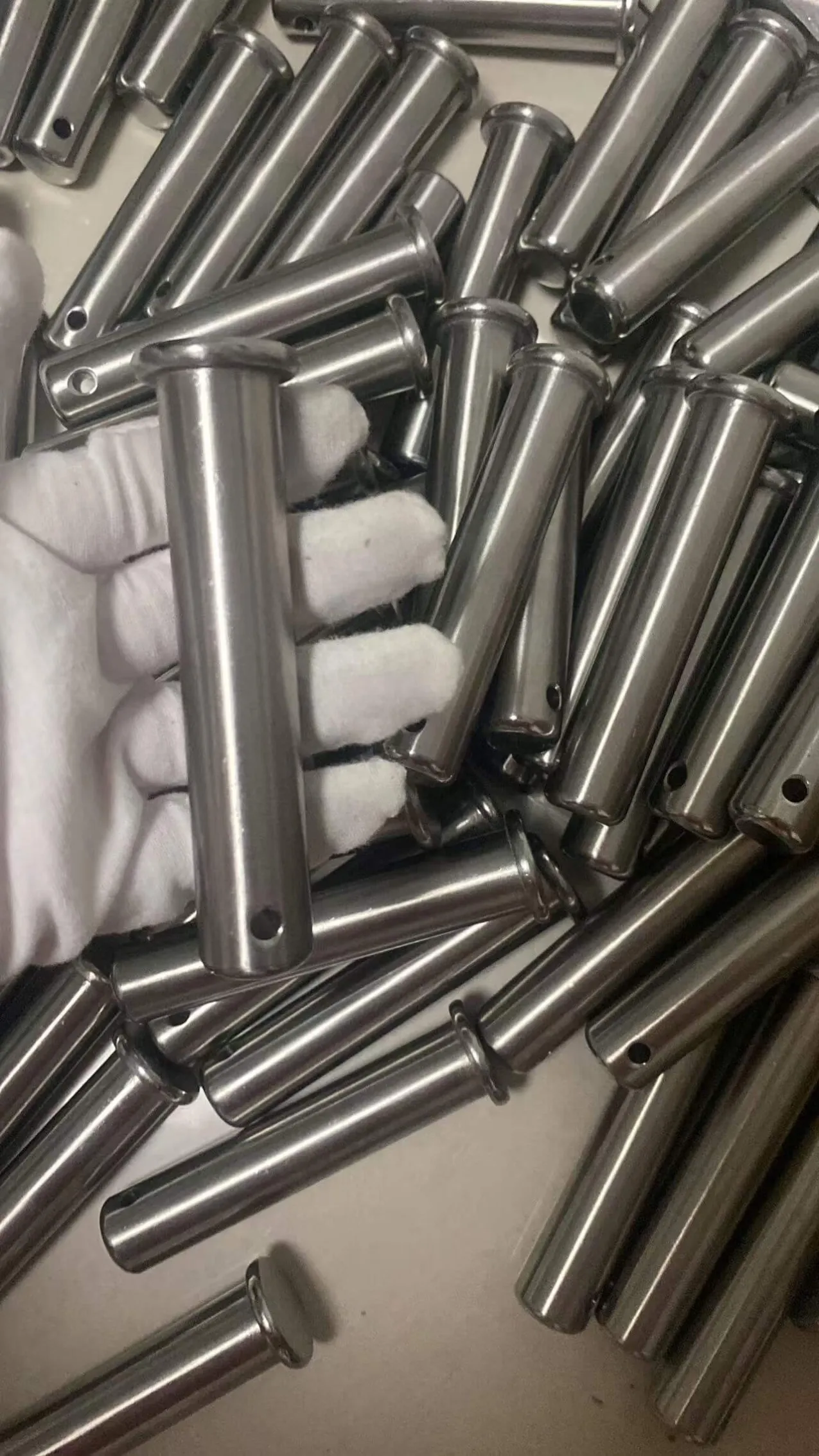
Different removable pins solve different problems. A ball lock pin uses an actuated locking mechanism, while a detent pin typically relies on spring pressure for retention. A clevis pin usually needs a separate retainer. Agricultural lynch pins have their own retention geometry and intended uses.
I would not declare one design universally stronger. What matters is whether it suits the assembly and has documented performance for that configuration.
Design | Useful consideration | Important limitation |
|---|---|---|
Ball lock pin | Convenient repeated removal | Check locking engagement and pull-out behavior |
Detent pin | Simple positioning and retention | Not automatically suitable for structural loads |
Clevis pin with retainer | Separate retention element | Retainer and joint design must be appropriate |
Agricultural hitch or lynch pin | Equipment-specific connections | Use only where approved for the application |
For frequently adjusted machinery, ease of operation is valuable. But if accidental release would create a serious hazard, retention requirements must take priority over convenience.
How Does Dust Affect a Quick Release Pin?
Farm dust is not merely a cosmetic problem. Soil particles and crop residue can accumulate around a release button, locking balls, or mating hole. Depending on the design, contamination can increase operating force, prevent full engagement, or accelerate abrasive wear.
When I review a supplier's design, I ask whether the mechanism can be inspected and cleaned easily. I also ask whether the supplier has tested it using contamination conditions relevant to the equipment. A statement like “dust resistant” is not meaningful without a method and acceptance criteria.
For a representative test, buyers can agree on dust exposure, subsequent functional checks, and measurements of engagement and release force. Record the number of samples and any failures. That is more useful than trusting a perfectly clean showroom demonstration.
Can Vibration Cause a Pin to Loosen or Fail?
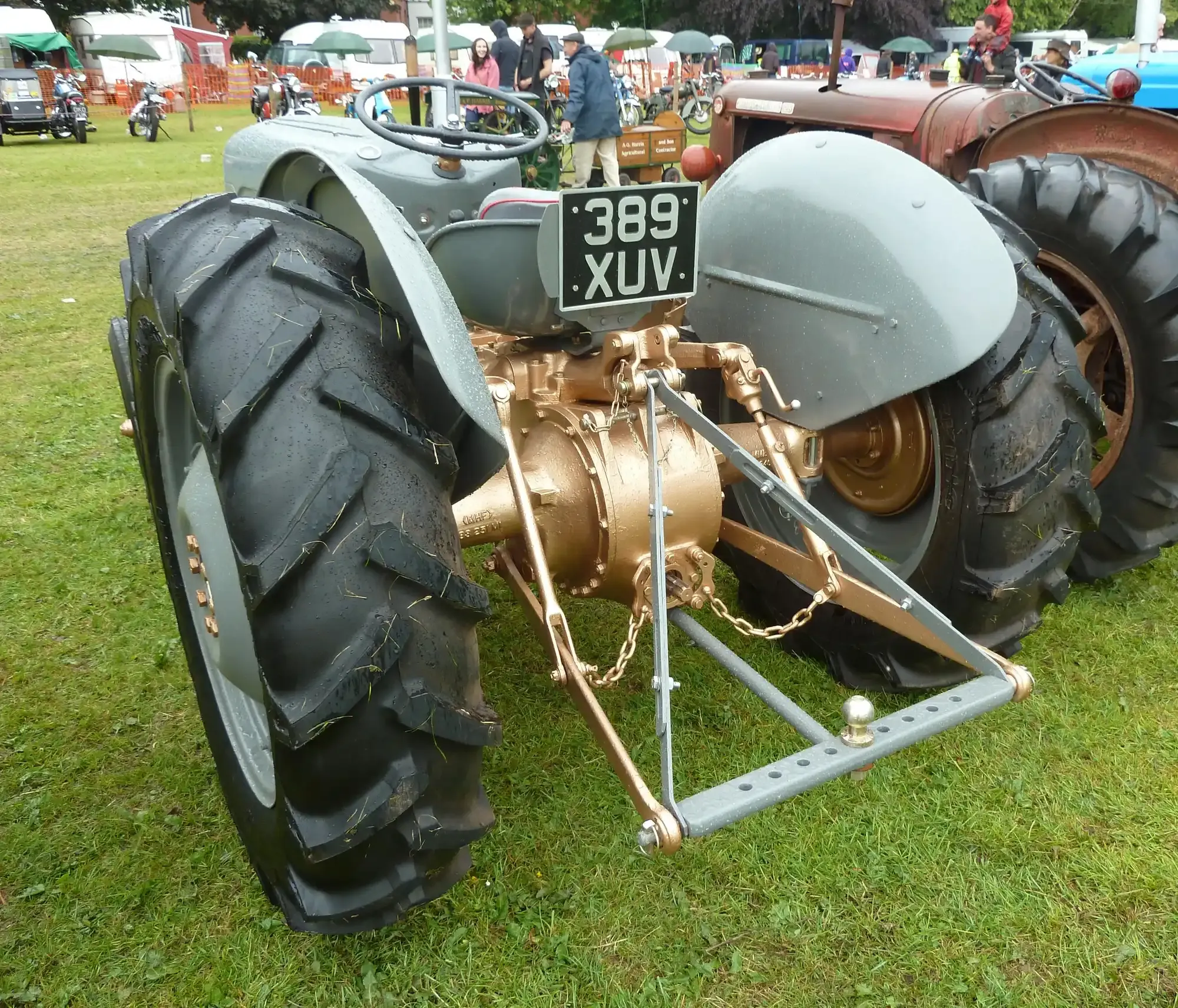
Yes, depending on the connection design. Field equipment experiences repeated impacts, alternating forces, and vibration from engines, rotating parts, and rough terrain. Those conditions can challenge both the pin body and its retaining mechanism.
I ask buyers to distinguish between shear loading, bending, axial pull-out, and repeated cyclic loading. These are different failure modes. For example, adequate shaft shear strength does not prove that the locking feature will prevent withdrawal.
Mating-hole clearance also matters. Too much clearance can allow motion and impact between the shaft and surrounding parts. Worn holes can change a joint that initially worked well.
For vibration-sensitive installations, request product-specific retention and fatigue evidence where appropriate. Consider a suitable secondary retainer or another approved fastening system when unintended release would be hazardous. Never replace an equipment-approved safety-critical fastener with an unrated general-purpose pin.
Which Materials Work Best in Rain, Mud, and Fertilizer?
I look at the actual operating environment before choosing a material. A pin exposed mainly to rain faces different conditions from one repeatedly covered in fertilizer solution, irrigation chemicals, or abrasive mud.
Material or finish | Potential benefit | What to confirm |
|---|---|---|
304 stainless steel | General corrosion resistance | Suitability for local chemicals and loading |
316 stainless steel | Improved resistance in many chloride-rich conditions | Mechanical properties and cost |
Coated carbon steel | Cost and strength options | Coating durability and damaged areas |
Hardened alloy steel | Strength and wear options | Corrosion protection and toughness |
Neither stainless steel nor coating guarantees indefinite service life. The pin's internal springs and locking components may also use different materials from the shaft.
Salt spray testing may help compare specified corrosion performance under controlled conditions, but test hours cannot be converted directly into years in a farm field. For product claims, ask for the actual test method, exposure duration, observations, and acceptance criteria.
How Do You Select Diameter and Grip Length?
Start with the mating assembly, not the supplier's stock list. Diameter affects fit and structural capacity. Usable grip length determines whether the pin can pass through the stack and allow the locking feature to engage correctly.
I recommend supplying an approved drawing showing shaft diameter, hole size, tolerance, minimum and maximum stack thickness, locking-ball position where relevant, and available installation clearance. Ask the supplier how it defines grip length; the reference surfaces can vary between designs.
An undersized pin may create unwanted movement. An oversized pin may not fit. An incorrect grip length can prevent full engagement even when the nominal diameter is right.
Do not automatically tighten every tolerance. Identify dimensions critical to function, then agree on realistic inspection criteria. Also consider mating-hole wear over time, especially on frequently adjusted equipment.
Before ordering, confirm how the supplier defines grip length, then check that definition against the actual mating assembly.
What Do Load Ratings Actually Tell You?
A load figure needs context. Published values may describe ultimate shear strength, tested failure load, axial retention, or allowable working load. These cannot be substituted for one another.
I ask the supplier to identify the tested product configuration, material, dimensions, loading setup, and whether the figure includes an engineering safety margin. Double-shear and single-shear values also require different joint assumptions.
For agricultural machinery, the weakest part of the connection may be the bracket, hole edge, or surrounding structure rather than the pin itself. A stronger shaft does not repair a poor joint design.
If the application is safety-critical or transfers significant structural loads, qualified engineering review and appropriate validation should come before purchasing. SKN's general company profile is not evidence of a particular pin's working-load rating.
What Should You Inspect Before a Bulk Order?
For repeat OEM and wholesale orders, I suggest agreeing on a small set of measurable requirements before approving samples. Inspection should correspond to the actual function of the part.
Check | Evidence to request |
|---|---|
Material | Grade identification and lot traceability |
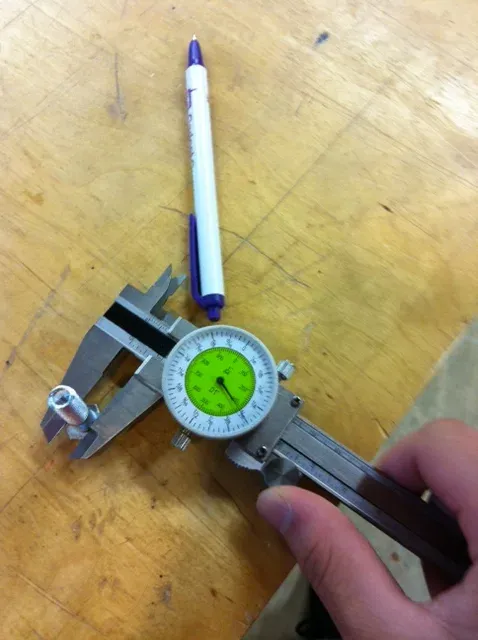
Dimensions | Drawing-linked measurement report |
Locking operation | Engagement and release test results |
Load performance | Relevant test report for the specified design |
Surface protection | Finish specification and appropriate test evidence |
Production consistency | Inspection plan and batch identification |
Samples should represent the intended materials and production process as closely as possible. A nicely finished prototype is not proof of repeatable mass-production quality.
For harsh agricultural service, you might also specify contamination, repeated-operation, or environmental tests. Establish sample quantities and acceptance criteria in advance; do not invent universal cycle counts or corrosion limits.
How Can Maintenance Improve Pin Reliability?
Even an appropriately selected pin needs attention after time in the field. Mud, wear, corrosion, and damage can change how a connection behaves. I recommend inspecting the shaft, mating hole, retaining elements, and release operation according to the equipment manufacturer's instructions.
Replace components with visible deformation, damaged locking elements, or unacceptable wear. Clean contamination using methods compatible with the material and mechanism. Lubrication may be useful for some designs, but the wrong lubricant can attract grit; follow the relevant product guidance.
For OEM buyers, maintenance access is also a design consideration. A removable pin that cannot be reached or inspected easily may create avoidable downtime later.
How Should Agricultural OEM Buyers Evaluate a Supplier?
A useful supplier should ask questions before quoting. What equipment uses the pin? Does it carry load? How often is it removed? What drawings, material requirements, and inspections apply?
For a custom request, I would send the supplier a complete RFQ package: drawing revision, quantities, operating environment, load information, material or coating requirements, acceptance criteria, and delivery destination. Then compare responses on technical clarity, not price alone.
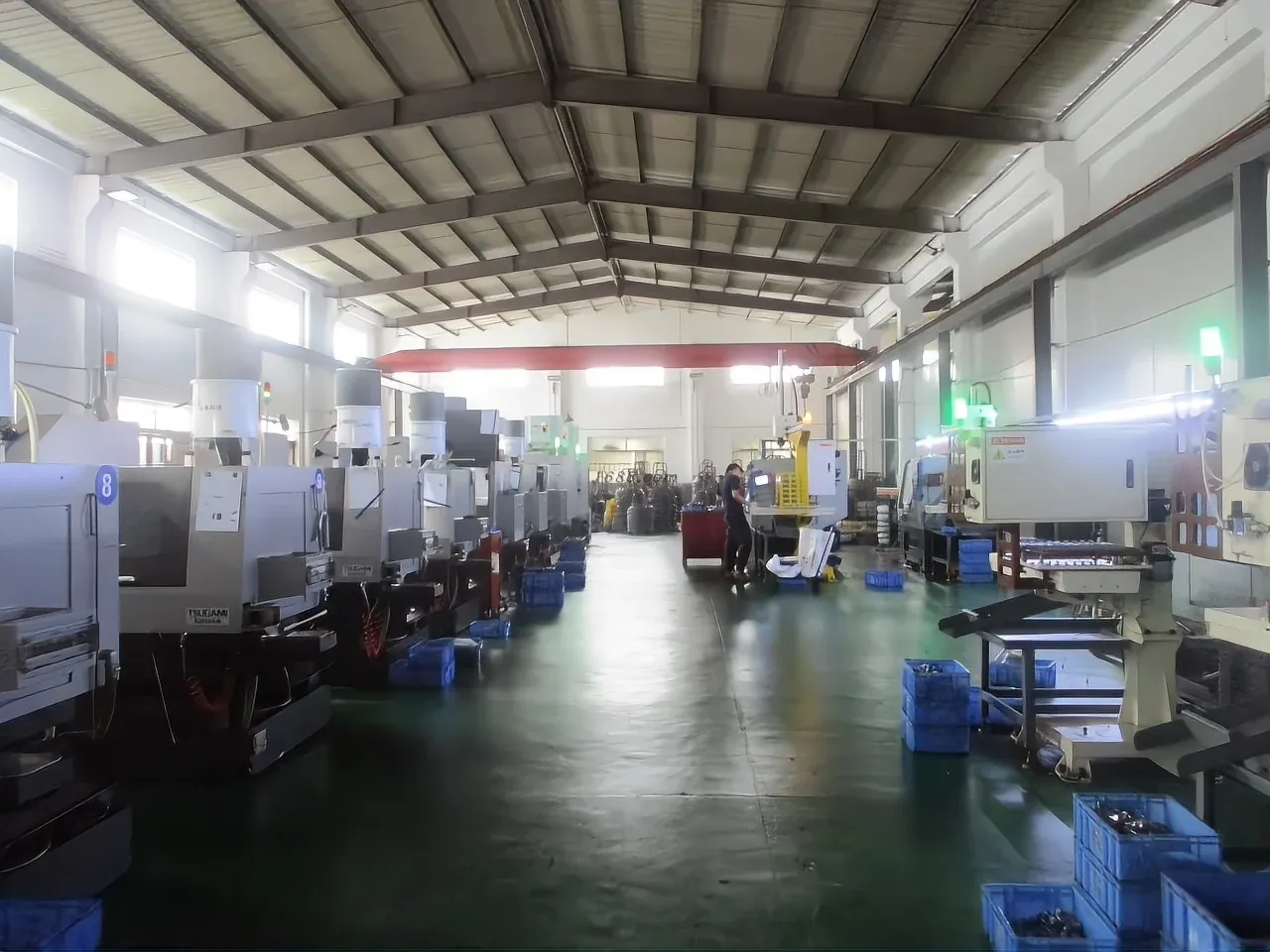
At SKN Fastener, our product scope includes quick release pins, ball lock pins, plungers, and precision machined components. We serve B2B manufacturing and wholesale inquiries. Our company was established in 2010, but buyers should still verify the actual product specification, relevant manufacturing capability, and documentation for their order.
Watch for suppliers who promise any load capacity without reviewing the application, cannot explain outsourced processes, or provide certificates unrelated to the item being purchased. A realistic limitation is more useful than an unsupported guarantee.
For custom and OEM work, confirm which production processes are performed in-house and which are outsourced before approving a supplier.
What Should You Do Before Ordering Agricultural Quick Release Pins?
Match the pin to its real loads, locking needs, dimensions, dust exposure, and corrosion environment. Verify samples and inspection requirements before committing to quantity. Send SKN Fastener your drawings, application details, and order volume to discuss a suitable custom or wholesale fastening solution.
Photo note: The photographs in this article are third-party images from Wikimedia Commons, used under their stated Creative Commons licences and credited beneath each image. They do not depict SKN products, staff, equipment, testing or installations.